
Varicose Vein Treatments in Singapore: Your Options Explained
Modern varicose vein treatment corrects the underlying venous reflux — the backward flow of blood caused by faulty vein valves — rather than simply removing the visible veins. Most procedures are minimally invasive day procedures performed under local anaesthesia, and options range from conservative measures to endovenous catheter-based treatments to surgery.
Treating the Source, Not Just the Symptoms
Two patients may have almost identical-looking varicose veins but completely different patterns of venous reflux on ultrasound. This is why the duplex ultrasound scan — not the appearance of the veins — forms the foundation of modern varicose vein treatment planning. By accurately identifying the underlying cause of your symptoms, the scan enables your vascular specialist to recommend the treatment most likely to provide durable symptom relief.
Treatment is personalised. Your vascular specialist considers your symptoms, the severity and location of venous reflux, skin changes or other complications, your general health, and your personal goals and preferences before recommending any intervention. Not everyone with varicose veins requires treatment — it is recommended when it is likely to provide meaningful clinical benefit.
For a detailed explanation of the assessment process, see Your Consultation and Duplex Ultrasound Scan.
Conservative Measures
Compression Stockings
Compression stockings are specially designed medical garments that apply graduated pressure to the legs, helping improve venous blood flow and reduce symptoms such as aching, heaviness and swelling. They help control symptoms while being worn but do not repair damaged vein valves or eliminate venous reflux.
Lifestyle Changes
Regular exercise, maintaining a healthy weight, avoiding prolonged standing or sitting, and leg elevation can reduce symptoms and support overall vein health. However, these measures cannot repair damaged vein valves or reverse established venous reflux.
Minimally Invasive Endovenous Treatments
All four modern endovenous treatments aim to achieve the same goal: eliminating venous reflux by closing the diseased vein so that blood is redirected into healthy veins. The differences lie in how the vein is closed, what anaesthesia is required, the recovery profile, and the strength of long-term evidence.
Endovenous Laser Ablation (EVLA)
EVLA is one of the most commonly performed treatments worldwide. A fine laser fibre is inserted into the diseased vein under ultrasound guidance and delivers thermal energy to seal the vein permanently. International guidelines recommend endothermal ablation, including EVLA, as a first-line treatment for suitable patients.
Radiofrequency Ablation (RFA)
RFA closes the diseased vein using controlled radiofrequency energy delivered through a catheter. Like EVLA, it is an endothermal treatment recommended as first-line therapy by NICE and ESVS guidelines, with long-term closure rates exceeding 90–95%.
Mechanochemical Ablation (MOCA)
MOCA combines a rotating wire with a sclerosant to seal the vein without using heat. Because it does not require tumescent anaesthesia, some patients find the procedure more comfortable. It is an excellent alternative for selected patients with suitable vein anatomy.
VenaSeal™ (Medical Adhesive)
VenaSeal closes the diseased vein using a specially formulated medical adhesive (cyanoacrylate). It does not use heat and requires only a small amount of local anaesthetic at the catheter insertion site. Compression stockings may not be required after VenaSeal in many patients.
Open Surgery
Before the development of minimally invasive treatments, open surgery (high tie, ligation and stripping) was the standard treatment for varicose veins. Although performed less frequently today, it remains effective for selected patients — particularly those with vein anatomy unsuitable for endovenous treatment, certain cases of recurrent varicose veins, or very large tortuous veins.
Choosing the Right Treatment
There is no single treatment that is best for everyone. The most appropriate treatment depends on your duplex ultrasound findings, the anatomy of your veins, your symptoms, your general health and your personal preferences. The best treatment is not determined by the latest technology — it is the treatment that best matches your individual pattern of venous disease and offers the greatest likelihood of long-term success.
For a detailed comparison of how each treatment differs, see Comparing Your Options. For what to expect after treatment, see Recovery and Aftercare.
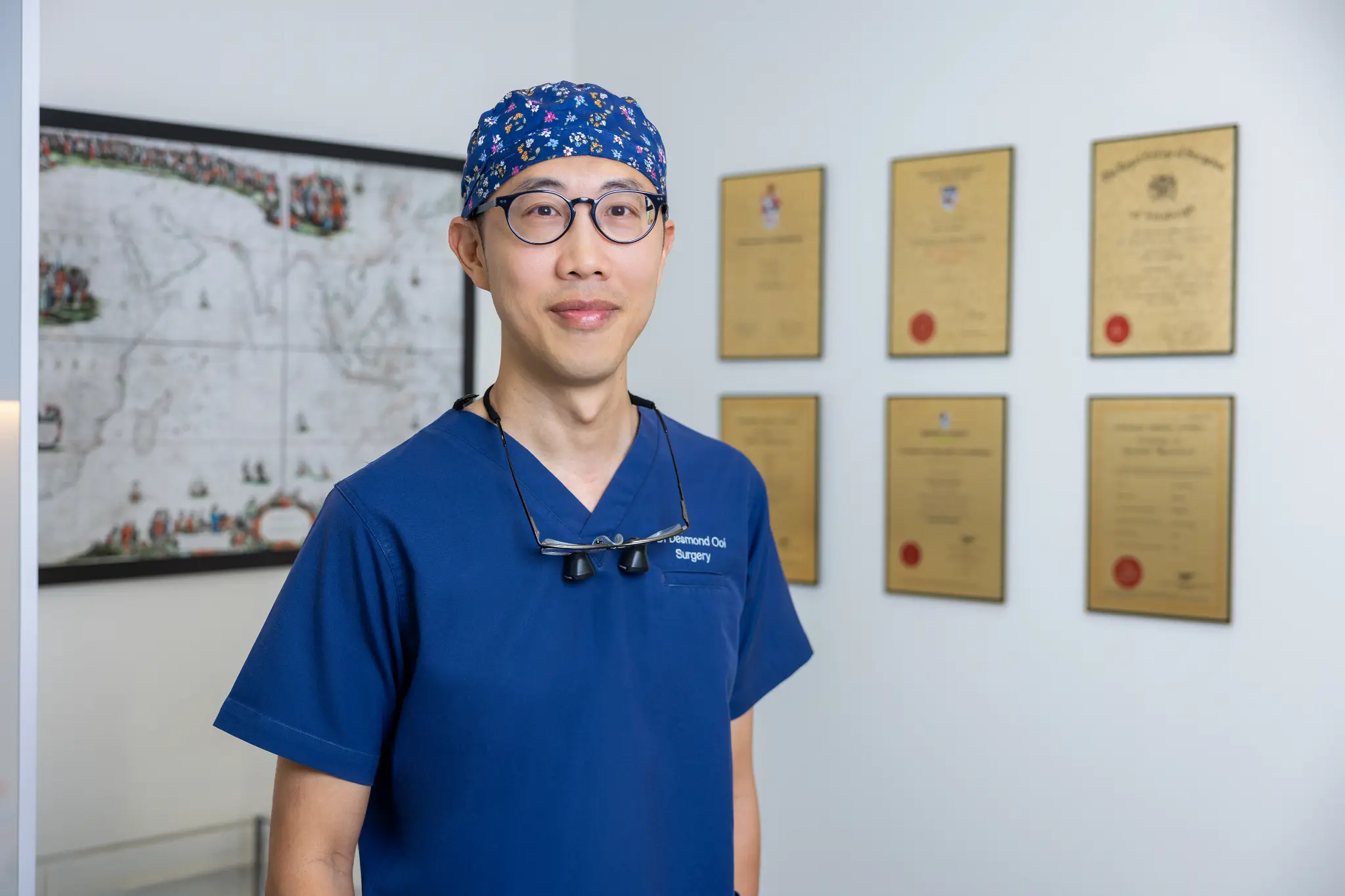
"I offer the full range of modern varicose vein treatments and recommend what suits your veins — not a one-size-fits-all procedure. The right choice depends on your ultrasound findings, your anatomy, and your circumstances."
— Dr Desmond Ooi, MBBS · MMed Surgery · FRCS (Edinburgh)