
Mechanochemical Ablation (MOCA): A Non-Thermal Option
Mechanochemical Ablation (MOCA) is a minimally invasive treatment for varicose veins that closes the diseased vein without using heat. Instead, it combines a rotating wire with a specialised medication (called a sclerosant) to seal the vein from the inside.
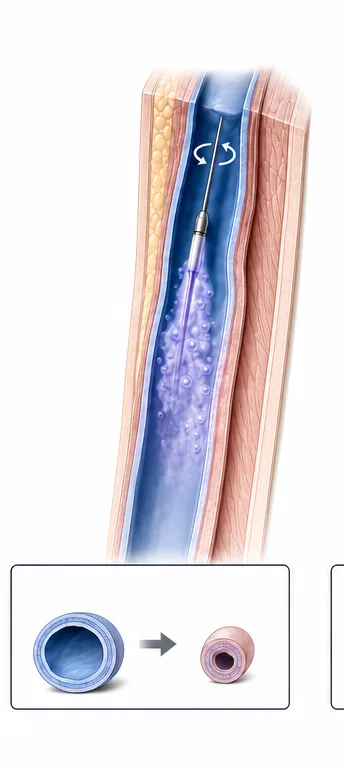
Illustration for educational purposes. Not to scale.
One of the main advantages of MOCA is that it does not require tumescent anaesthesia — the series of local anaesthetic injections placed around the vein during laser (EVLA) or radiofrequency ablation (RFA). As a result, some patients find the procedure more comfortable.
During the procedure, a thin catheter is inserted into the diseased vein under ultrasound guidance through a small needle puncture. At the tip of the catheter is a tiny rotating wire that gently disrupts the inner lining of the vein while a liquid sclerosant is simultaneously delivered into the vein. The combination of mechanical injury and chemical sclerosis causes the vein walls to collapse and seal permanently.
Over time, the treated vein is gradually broken down and naturally absorbed by the body. Once the vein has been closed, blood is redirected into healthy veins, improving venous circulation without affecting overall blood flow from the leg.
MOCA is performed as a day procedure under local anaesthesia. Most procedures take 20 to 45 minutes, depending on the number and complexity of the veins being treated. Because no thermal energy is used, there is no risk of heat-related nerve injury or skin burns, and many patients experience relatively little discomfort following the procedure.
Clinical studies have shown that MOCA provides excellent symptom relief and high vein closure rates in appropriately selected patients. Compared with EVLA and RFA, MOCA may offer less discomfort during the procedure, no need for multiple tumescent anaesthetic injections, and rapid recovery and return to normal activities.
However, while the short- and medium-term results are excellent, long-term evidence extending beyond five years is currently less extensive than for EVLA and RFA, which have been studied for more than two decades. For this reason, many international guidelines continue to regard endothermal ablation (EVLA and RFA) as the preferred first-line treatment for suitable patients, with MOCA representing an excellent alternative in selected situations.
As with all vein procedures, complications are uncommon but may include temporary bruising or tenderness, mild inflammation of the treated vein (phlebitis), skin pigmentation, incomplete vein closure or recurrence, allergic reaction to the sclerosant (rare), and deep vein thrombosis (rare).
MOCA is an excellent option for selected patients, particularly those who wish to avoid tumescent anaesthesia or who have vein anatomy that is well suited to this technique. A duplex ultrasound scan is essential to determine whether MOCA is appropriate for your individual condition.